Long and slim
Sea kayak
Coastal paddling
- Built forCoasts
- ShapeLong, slim
- ExtraBulkheads
Quick decision aid
Ao Thalane mangrove kayak from Krabi
★ 4.6 · 2,297 guest ratings
Two taps to your boat
Say how much paddling you want to do and what kind of water appeals, and a matching trip appears.
Suited to you
from $36
A paid seat lets a guide take on more of the paddling.
Suited to you
from $25
A small group goes through the mangrove creeks.
Suited to you
from $26
It is labelled for families with children.
Suited to you
from $36
The trip can grow into a full island day.
Suited to you
from $117
Canoeing around Hong island is part of it.
A kayak and a canoe are not the same boat. Learn how they differ, what a Krabi tour expects of you, how to paddle with good form and how to get in without a wobble.
Editorial team, aothalanekayak.quest · Updated November 12, 2026 · Read in 7 min
The search for single person canoe vs kayak usually comes from first-timers who have seen both in photographs. The difference is mostly in how you sit and how you paddle. The International Canoe Federation describes the kayak as a boat in which you sit and swing a paddle with a blade on each end, dipping it on alternate sides to drive the boat ahead.1 A canoe paddle has just one blade, and racers kneel with one knee down and the other foot forward.3
The United States National Park Service adds shape and use. The Service sets the canoe apart as the wider, open-topped boat, and says that without flotation it can take on water and swamp more readily.2,4 A sea kayak, by contrast, is a long, slim boat designed for coastal paddling, with bulkheads to keep water from flooding the whole boat, while a recreational kayak suits casual paddling on calm rivers, ponds and small lakes and is not advised on windy days.5,6,7,8 These are the boats you will hear named on a first trip.
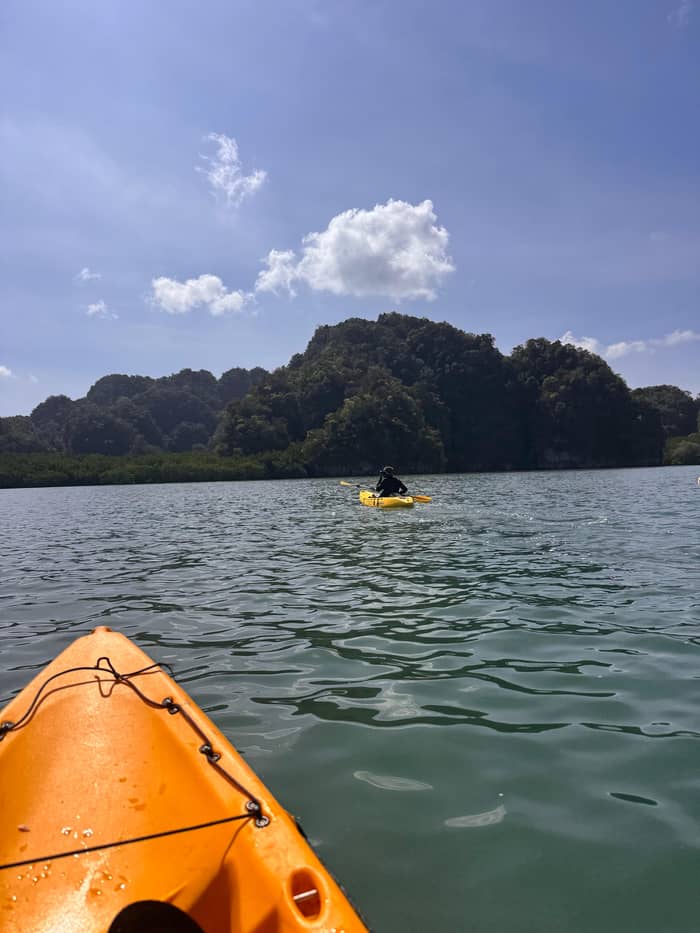
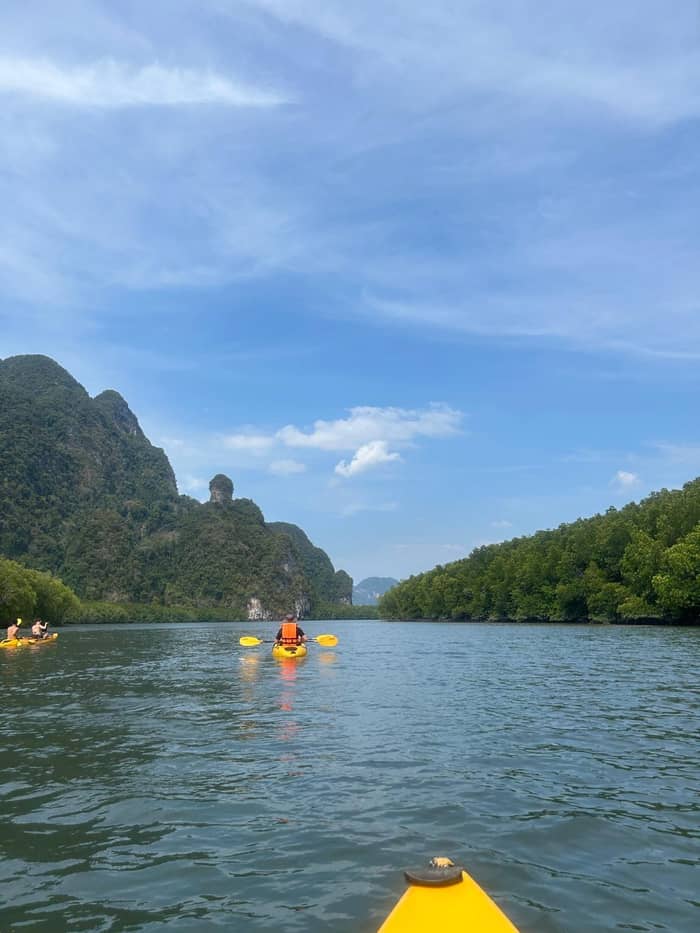
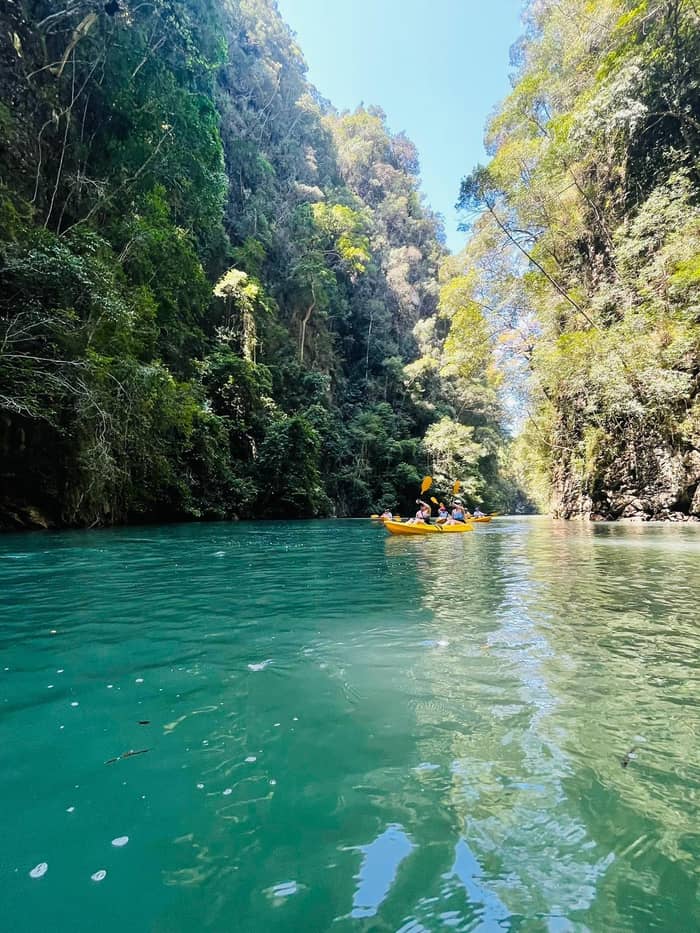
For a beginner in Krabi, the question is less which design is better and more what the tour hands you. The Ao Thalane trips described below are kayak trips, with a seated paddler and a paddle with a blade at each end, and the sea-kayak listing even carries the type in its name. A canoe shows up in Phang Nga Bay, where one speedboat trip lists canoeing around Hong island, but that is a different bay.
Boat types
| Feature | Kayak | Canoe |
|---|---|---|
| How you sit | Seated | Kneeling in racing |
| Paddle | Double blade | Single blade |
| Boat shape | Long and slim at sea | Open and wider |
| In waves | Sea kayaks suit coasts | Can swamp easily |
| Krabi mangrove trips | Named in listings | Not named |
Compiled from the International Canoe Federation and the National Park Service; the Krabi row reflects the listings named on this page.1,3,5,2,4,6,8,9
Read the listings carefully. The home tour is billed as a kayak tour: 4.5 hours, transfers included, an English-speaking instructor, moderate fitness advised, from $36 and rated 4.5 across 2,297 reviews. It also sells a paid seat with a guide-assisted paddle, though it does not describe the boats in detail, so ask the operator whether you will be in a single or a shared kayak.
For a smaller group there is the half-day listing: up to 10 guests, 4.5 hours, from $25. The sea-kayak listing, from $36, adds an optional day at Hong Island and runs 4 to 8 hours. The mangrove-with-pickup listing runs 4 to 5 hours from $24. None of these listings says whether the kayaks are single or double, and none says that it uses a canoe.
If you came to Krabi hoping to paddle a single person canoe, there is no listing here that says you can. What you will find is guided kayaking in creeks with a guide at hand. A single boat for each paddler gives you more control; a shared boat lets one person rest while the other works. Ask which you will get when you book.
How long you paddle
Hours per outing as the listings state them; the sea-kayak trip can stretch from 4 to 8.
Kayak requirements on a Krabi tour are mostly about fitness and health, not skill. Moderate fitness is the home listing's advice, whereas the pickup listing welcomes every fitness level. The ATV and kayak day needs neither kayaking nor ATV experience. The Railay clear-kayak tour welcomes all ability levels, and the Klong Root listing is labelled for families with children.
Some listings add health notes. The sea-kayak listing is not meant for pregnant women, infants or anyone with back or neck trouble. The extras listing excludes pregnancy, high blood pressure, heart disease and bone disease from its recommendation, and it prices a child ticket for ages 4 to 11. Read the listing you pick; the rules differ between listings, and ages, weights and swimming ability are matters to confirm with the operator.
Group size is a requirement of a different kind. A smaller group means a guide can help each paddler, and the half-day listing is limited to 10 participants while the mangrove-with-a-meal listing is limited to 9. The private early-morning listing is available as a private or small-group trip. If you are nervous, choose from these.
Boat types
Long and slim
Coastal paddling
Easy
Casual paddling
Wider
Single blade
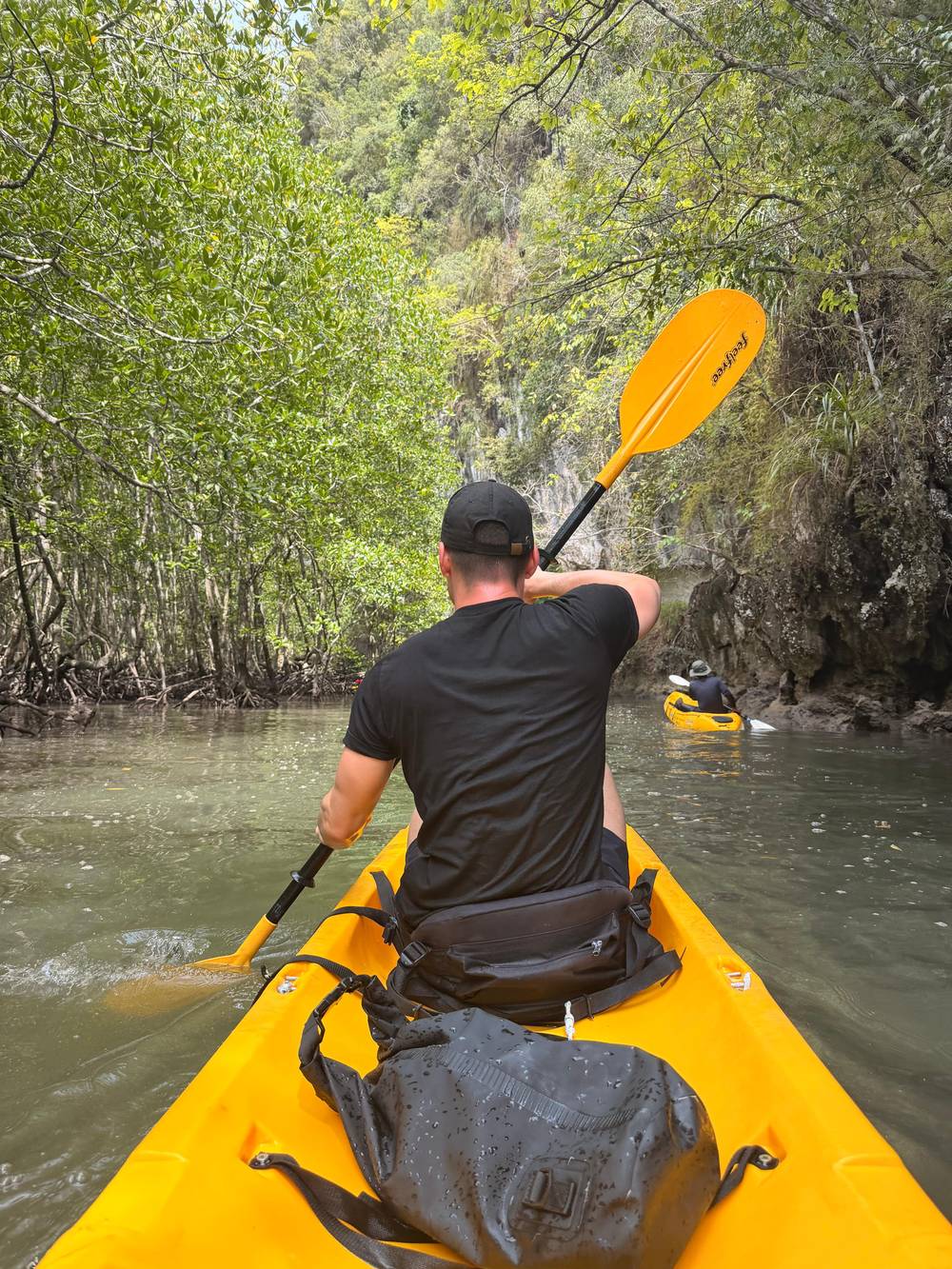
How to kayak properly comes down to good form, which saves your arms. Sit upright with your back supported, feet on the foot rests and knees slightly bent, and hold the paddle with your hands a little more than shoulder width apart. Because a kayak paddle has a blade at each end and the paddler pulls it through the water on alternate sides, the rhythm is left, right, left, right.1 Turn your torso as you pull, rather than only bending your elbows, so that the large muscles of your trunk do the work instead of your shoulders.
Keep the strokes short and relaxed. Dip the blade fully, pull it back past your hip, lift it out cleanly and let the other blade enter. A paddle that digs in too deep or too far from the boat wastes energy and splashes your lap. If you are paddling with others, match the pace and keep a boat length of space between you. A paddle through narrow channels does not need speed; it needs calm and a steady pulse, and that is easy to learn on a guided trip.
Look where you want to go and not at your bow. The kayak follows your eyes, and if you stare at the bank you will end up there. Breathe, pause and look up regularly. Enjoy the scenery; mangrove channels are narrow and curving, and a guide ahead will pick a line you can follow. The National Park Service reminds paddlers to be ready to rescue themselves, and to practise doing so.11
Price your first paddle
Choose how many of you are paddling and compare the easiest ways in.
Compare 3 side by side
Choose how many of you are paddling and compare the easiest ways in.
≈
View≈
View≈
ViewStarting prices from GetYourGuide, converted at the ECB reference rate. You will see the exact price when booking.
Your first paddle
Briefing
Safety instructions come before you set off.
Getting in
Step into the middle of the boat and sit at once.
Posture
Back supported, feet on the rests, paddle held wide.
Strokes
Pull the paddle through the water on alternate sides.1
Steering
Eyes up and a lighter stroke on the side you drift from.
Finish
Take a break, drink and let the guide help you out.
A pair of worries comes up again and again: steering straight and getting in without a wobble. For straightness, remember that each stroke on one side turns the bow slightly the other way. A strong stroke on your right turns the bow left, so alternate evenly and make the stroke longer on the side towards which you drift. If you still curve, tell the guide, who can show you a sweep stroke to bring the bow round.
To get in without tipping, keep your weight low and central. Step into the middle of the boat with the paddle across the cockpit or held for balance, sit down as soon as you are in and avoid standing up again, because a high centre of gravity is what makes a small boat tip. The National Park Service notes that, unless packed with flotation, an open canoe can fill with water and swamp more easily.4
If you do tip, stay calm. Hold on to the boat, keep your head up and wait for the guide. Thai tourism officials say life jackets belong on every boat trip, sea or river, so keep yours fastened as long as you are afloat.10 The National Park Service also advises checking the marine weather forecast and leaving a float plan with someone.12,13 Your guide will brief you before you start.
Video
Headwaters Kayak on YouTube · Video data is requested only when you tap play.
In a kayak, the paddler is seated and uses a double-bladed paddle pulling the blade through the water on alternate sides to propel the boat forward
Before your first paddle
Start with the time you have. A half-day trip fits a morning or an afternoon and is the easiest way to try kayaking: the half-day Ao Thalane listing is from $25 for 4.5 hours and has 1,056 reviews averaging 4.6. If you want a short, gentle paddle, the Klong Root listing runs 2.5 hours and is from $26, with 449 reviews averaging 4.4. If you have more energy, the home tour takes 4.5 hours.
Think about help. A guide-assisted seat is a way to join the tour without the heavy lifting, and it is sold for a small fee on the home listing. A private guide is another way: the early-morning Ao Thalane listing is offered as a private or small-group trip and is from $36, with 15 reviews averaging 4.9. It is small in reviews, so treat the rating with care.
Finally, book with a safety net. The home listing allows reserve-now-pay-later booking and refunds cancellations made up to 24 hours ahead. Wear what can get wet, carry a waterproof pouch and take the briefing seriously. A good first paddle leaves you feeling looked after and keen to go again, and the rest of this site covers where to launch, how to get there and when to go.
FAQ
Moderate fitness is advised, and a paid seat takes some of the work.
A listing states that no previous kayaking experience is needed.
The paddle is pulled through the water on alternate sides.1
The extras listing has a child ticket for ages 4 to 11, and the Klong Root listing carries a family label.
It is sold as a paid upgrade on the home listing.
Sources
Further reading
Heading to Ao Thalane? Ask a real person here.